Unmasking Bad Chad: authenticity or just good TV?
Introduction
Reality‑TV has created a micro‑industry of “garage” shows where charismatic builders take rusted hulks and turn them into dream machines. Producers often edit builds into week‑long dramas with false deadlines and flamboyant characters, leaving viewers to wonder how much of the craft is real. Bad Chad Customs — a Discovery series following Nova Scotia fabricator Chad Hiltz — presents itself as an antidote. Hiltz, nicknamed Bad Chad, claims he can transform junkyard scrap into award‑winning hot rods using little more than a welder and his imagination. Fans celebrate his resourcefulness and the show’s apparent lack of scripted drama; critics dismiss the cars as unsafe art projects built for television. This report examines the origins of Bad Chad Customs, compares its craftsmanship to that of established custom shops, assesses the influence of television on perception, explores the economics behind the brand, gauges fan sentiment, and places the show within the broader context of reality‑TV car culture. The goal is to answer a simple question: is Bad Chad Customs authentic, or just another reality‑TV façade?
Origins & background of Chad Hiltz and his shop
Chad Hiltz was born 31 August 1971 in Kingsport, Nova Scotia. His father operated a White Rose gas station, and young Chad spent his childhood watching classic cars come in for fuel. At age 14 he was already driving his mother’s 1946 Dodge ½‑ton truck to school; by 16 he’d convinced his father to sell a hockey‑card collection so he could buy a 1934 Ford 3‑window coupe. Hiltz left high school early to support his family; he worked at a grain mill and a chicken‑processing plant but continued tinkering with cars in his spare time. He married, had a daughter at 16 and a son, Colton, in 1998, and eventually divorced. In 1999 he met his partner Mandy Mosher, left the chicken plant and opened a makeshift shop on their oceanfront property in Kingsport. After neighbours complained about the noise and scrap cars, the couple relocated to Canning, NS, where Hiltz built his own shop and embraced custom car fabrication. His early projects ranged from rat rods to 1950s classics; he eventually created signature customs like “Green Goblin” (a 1962 Chrysler), “Bat out of Hell” (a 1960 Chrysler Windsor) and “Hotrod from Heaven”. Hiltz even attended a metal‑shaping workshop with legendary customizer Gene Winfield, later winning awards at the Atlantic Nationals car show.
For years Hiltz traded under Green Goblin Customs, but legal concerns over the comic‑book name forced him to rebrand as Hiltz Auto Co. The shop is a one‑room, hand‑built garage in rural Canning where he works with his fiancée Jolene MacIntyre (business manager), son Colton, and friends Aaron and Alex. Their home base and working‑man’s budget became central to the Discovery Channel series Bad Chad Customs, which debuted on 1 January 2019. In press materials, Discovery likened Hiltz to a mix of MacGyver and Willy Wonka: he uses parts salvaged from boats, airplanes and old lockers to build one‑of‑a‑kind cars on a shoestring.
Craftsmanship vs. persona
Industry benchmarks
To evaluate Hiltz’s workmanship, it helps to contrast his work with that of high‑end custom shops.
- Kindig‑It Design (Salt Lake City) has produced over 320 cars for the long‑running television series Bitchin’ Rides. A Hot Rod feature credits owner Dave Kindig’s success to “high‑tech modifications, high‑horsepower engines” and designs that “stand the test of time”. These cars routinely fetch six‑figure prices and are engineered for performance as much as aesthetics.
- West Coast Customs became famous through Pimp My Ride but has been dogged by accusations of missed deadlines, aggressive sales tactics, and low‑quality or unsafe vehicles. HotCars also reports lawsuits over unpaid wages and controversies such as delivering an unsafe pink Mercedes G‑Wagen.. Despite celebrity clientele and reported $10 million annual revenue, WCC’s reputation illustrates how flashy TV builds can mask underlying problems.
The Bad Chad method
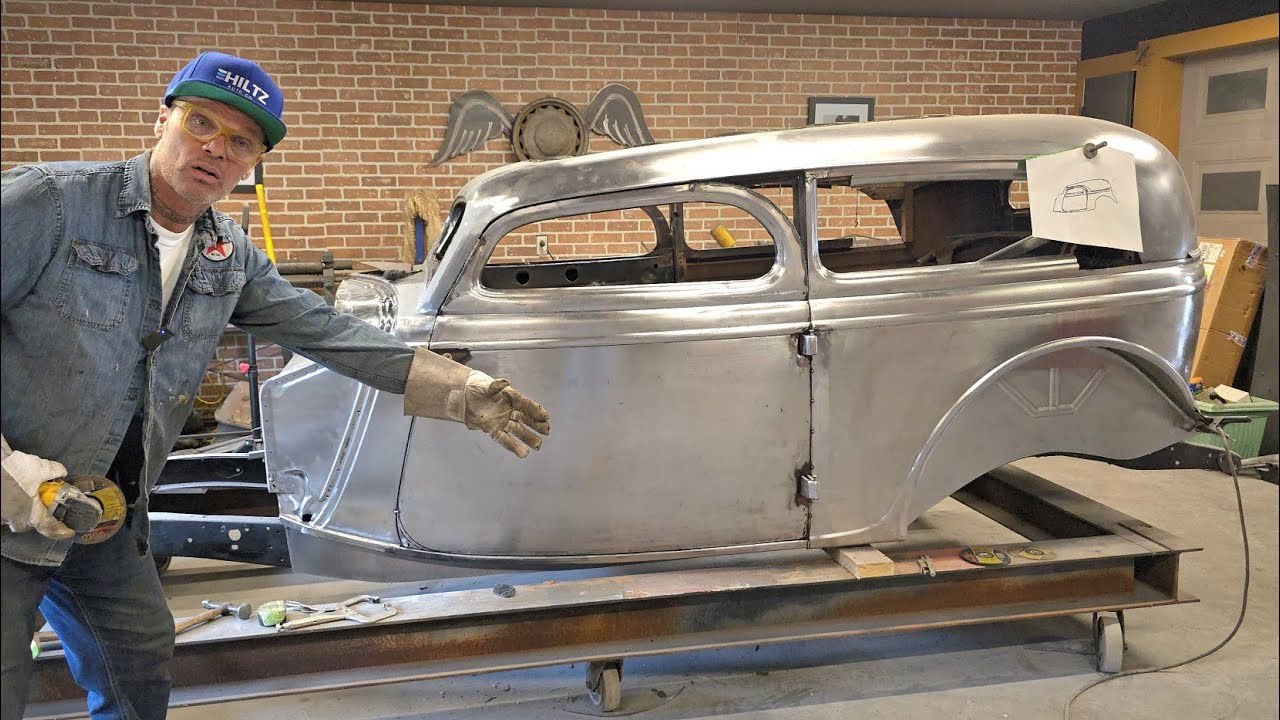
Hiltz takes the opposite approach. Discovery’s press release emphasises that he and his crew craft vehicles from whatever they can scavenge — “parts from boats, planes or old lockers” — relying on imagination rather than high budgets. The Cinemaholic notes that his rural Canning garage uses scrap metal and minimal power tools to transform junkyard finds. He forms plexiglass bubble roofs in his home oven and bends sheet metal by hand. On screen, Hiltz sketches designs on metal panels and improvises proportions on the fly. The finished cars evoke 1950s show rods with exaggerated fins and chopped roofs, and they often bear names like “Chadillac” and “Trucker’s Dream.”
This improvised craftsmanship delights some viewers. On BBCBoards, a fan from Nova Scotia praised the show for lacking the contrived drama seen on other car shows and called Hiltz a “real guy who has been doing custom car builds for years”. Another commented that the show is “original, genuine and lacks that dreaded scripted feel”. Fans appreciate that he builds “rolling art” rather than cookie‑cutter muscle‑car restorations.
Critiques of quality
However, concerns about durability and finish surface repeatedly. A BBCBoards commenter questioned whether there is a market for his cars because the show rarely shows suspension, brakes, or drive‑train work and “he seems to throw some stuff on them”. Others criticised the use of excessive body filler and old engines. The IMDB review titled “Doesn’t pass the smell test” notes that the show skips over critical mechanical work; the reviewer believes the cars “look like they would be the first to fall apart” and expresses alarm that painting is done in a garage with doors open. Another review labelled Hiltz’s builds “chop slop,” worrying about safety and complaining that a dump‑truck project was built like a toy, with a hand‑cranked bed and wooden bench seats. Discussion on the Rods ‘n’ Sods forum similarly debated whether he is a master builder or a “bodger,” with critics pointing to heavy filler and rough treatment of his son Colton. These critiques suggest that while Hiltz’s cars are visually striking, their mechanical robustness and finish may fall short of industry standards.
In short, Bad Chad’s craftsmanship is more about artistic expression than engineering excellence. His persona as a creative scavenger is authentic, but the cars themselves are often sculpture on wheels rather than refined, performance‑oriented customs.
Media influence & authenticity
The role of television
The Discovery show has been instrumental in creating the Bad Chad brand. Press materials describe Hiltz as a “MacGyver‑like” builder whose team — fiancée Jolene, son Colton and friends Aaron and Alex — transforms scrap into unique rides like the “Green Goblin” and “Bat Out of Hell”. The Cinemaholic adds that the show is filmed in Canning and that Hiltz rebranded his shop to Hiltz Auto Co. due to licensing issues. Jolene MacIntyre negotiated the television deal, travelling with Hiltz to Los Angeles to meet producers before filming began. This partnership turned a local hot‑rodder into an international TV personality.
Television, however, rarely shows reality unfiltered. A 2026 HotCars article notes that most car shows are heavily scripted, with hired characters, rehearsed dialogues, fake sound effects, and manufactured deadlines designed to create tension. Producers sometimes re‑enact interesting moments off camera, and “petty squabbles, stupid intrigues and artificial deadlines” are staples of the genre. Even well‑respected shows like Top Gear admit to scripting. Within this landscape, Hiltz’s show feels refreshingly unscripted to many viewers; yet there is still editing, pacing and narrative shaping — we see dramatic countdowns and reveals but rarely the routine hours of bodywork and rewiring. Fans on BBCBoards who praise the lack of fake drama acknowledge that episodes condense complex builds into simple story arcs.
Authenticity on screen
Evidence suggests that Bad Chad Customs maintains more authenticity than many competitors but still conforms to reality‑TV conventions. Monster and Critics reported on an episode where Hiltz used his own oven to heat a plexiglass dome for a bubble‑top car; the sequence played up the tension of whether the plexiglass would melt, yet the ingenuity was real. Jolene’s role as business manager and on‑camera moderator also grounds the show. Nevertheless, the absence of mechanical detail and the fast turnaround times hint that some builds may be more showpieces than road‑ready vehicles.
Business model & economics
Working‑man budget vs. high‑end shops
Unlike Kindig‑It Design or West Coast Customs, which serve wealthy clients and sell finished cars for hundreds of thousands of dollars, Bad Chad operates on what Discovery calls a “working‑man’s budget”. Chad scours junkyards for donor parts and fabricates panels from scrap metal, keeping material costs low. The trade‑off is labour: custom building is time‑intensive, often taking hundreds of hours. Hiltz’s builds, though eye‑catching, are thus less likely to command six‑figure prices than Kindig‑It’s pro‑touring Corvettes or West Coast’s celebrity limos.
The economic sustainability of this approach hinges on media exposure and merchandise. A Distractify profile notes that Hiltz is “not selling high‑ticket automobiles” and instead markets his thriftiness. Jolene negotiated the TV deal, and the couple promoted the show at SEMA before its premiere. The article estimates that cast members may earn US$3,000–$5,000 per episode and suggests that Hiltz’s net worth is around US$1 million, far below rumours of $90 million. It adds that margins on custom builds are small once time and labour are accounted for. Thus, television and digital content become crucial revenue streams.
The Hiltz Auto Co. website illustrates this diversified business. It showcases “Dream Cars” such as the 1938 Ford “Hotrod from Heaven” and 1957 Cadillac “Chadillac”, linking to YouTube videos. Alongside cars, the site sells graphic tees, hats, hoodies and jackets. Limited‑edition clothing and branded merchandise allow fans to support the shop. Hiltz also runs a YouTube channel featuring daily build videos, monetizing ad revenue. The combination of low‑cost builds, TV exposure and e‑commerce enables a modest but sustainable business.
By contrast, West Coast Customs in its prime employed around 40 people and generated $10 million in revenue (2008). Their business depends on high‑end clients (celebrities, tech billionaires) and product licensing. Kindig‑It Design likewise builds expensive turnkey hot rods with the help of CNC machines, custom paint booths and large staff. Bad Chad’s scrappy model cannot compete on financial scale; it thrives instead on storytelling and grassroots appeal.
Fan community & cultural resonance
Grassroots enthusiasm
Bad Chad commands a loyal following among viewers who value creativity over polish. On BBCBoards, one fan wrote that the show was better than over‑produced series like Counting Cars because there was “no BS or contrived drama” and they looked forward to more seasons. Another described Hiltz as a good‑ol’ Canadian redneck demonstrating “resourcefulness” and “working‑man’s creativity”. Comments on the IMDB review page likewise gush about the show’s originality and the father‑son dynamic.
Local pride also plays a role. The O’Canada blog writer came across Hiltz’s re‑imagined 1934 DeSoto truck while driving through Nova Scotia and was inspired by its curves, extended wheelbase and double rear axles. They noted that Hiltz operates Hiltz Auto Co. in Canning and has parlayed his skills into a Discovery show. Visitors to his shop often stop to chat and admire the cars, reinforcing his status as a community figure.
Purist criticism
Yet purists question the show’s educational value. In the same BBCBoards thread, one viewer pointed out that the builds omit brake, suspension and drivetrain details and speculated that potential buyers in rural Nova Scotia might be scarce. Another lamented the heavy use of body filler and worn-out engines. The Rods ‘n’ Sods forum questioned whether Hiltz is a builder or a “bodger,” suggesting that his end products are rough underneath the paint. Critics also cite episodes where Hiltz berates his son Colton for mistakes, calling it poor mentorship. Such comments reflect a divide between fans drawn to the show’s raw creativity and traditional hot‑rod enthusiasts who prioritise precision, reliability and mechanical excellence.
Criticism & controversy
Unlike some automotive reality stars, Bad Chad has largely avoided major scandal. There is no evidence of lawsuits, environmental violations or unsafe cars causing accidents. However, criticisms of his workmanship and TV portrayal persist:
- Rushed builds and filler. Multiple viewers complain that the show glosses over welding, paint prep, brakes and driveline engineering. Forums accuse him of using excessive body filler and leaving worn‑out engines in place.
- Unsafe practices. One IMDB reviewer argued that Hiltz paints vehicles in an open garage, resulting in dust in the finish and raising safety concerns. Another questioned a dump‑truck project built with a hand‑cranked bed and wooden bench seats.
- Aggressive on‑camera persona. Some viewers criticise the way Hiltz instructs his son, seeing it as harsh.
- Economics vs. quality. Distractify’s analysis notes that custom builds are time‑intensive and margins are thin; Hiltz’s low‑cost approach may compromise mechanical integrity.
These criticisms pale compared with controversies surrounding other shops. West Coast Customs has been accused of failing to pay employees and delivering unsafe vehicles. Some mainstream car shows have faced lawsuits over misrepresentation and faked events. By comparison, Bad Chad’s controversies revolve around craftsmanship and editing choices rather than legal or ethical breaches.
Authenticity in the age of reality‑TV car shows
Reality‑TV thrives on a tension between authenticity and entertainment. HotCars observes that most car shows hire colourful characters, script dialogues and manufacture deadlines to create drama. Sound effects are dubbed, and real events are re‑enacted for the cameras. Even widely respected shows like Top Gear admit to staging. Against this backdrop, Bad Chad Customs distinguishes itself by featuring a genuine small‑town builder who actually fabricates his cars. Fans emphasise that there are no fake fist fights or contrived personality clashes. The show still compresses months of work into an hour and often omits mechanical detail, but the core of Hiltz’s process — bending metal by hand, repurposing scrap — appears authentic.
Other shows emphasise high‑dollar gloss. Bitchin’ Rides showcases Kindig‑It’s spotless shop, CAD‑designed parts and six‑figure budgets. Fast n’ Loud and Counting Cars emphasise personalities like Richard Rawlings and Danny Koker and have been accused of heavy scripting and fake negotiations. In comparison, Bad Chad offers viewers a slice of blue‑collar ingenuity. The trade‑off is that his cars may be more sculpture than usable automobiles, and the show often glosses over the tedious mechanical work necessary for roadworthy builds.
Conclusion: authenticity or storytelling?
Bad Chad Customs occupies an unusual niche in the custom‑car world. Chad Hiltz’s origin story — a teenager in rural Nova Scotia who taught himself to build hot rods using scrap metal and later transformed his backyard hobby into a TV franchise — is genuine. He does build one‑off vehicles with limited budgets and minimal equipment. The show provides glimpses of real fabrication and celebrates the creativity required to repurpose junk. Fans appreciate this grassroots authenticity and the absence of manufactured interpersonal drama.
At the same time, the cars often lack the precision engineering, mechanical refinement and finish quality of high‑end customs. Reviews and forum posts raise valid concerns about structural integrity, safety practices and the omission of technical detail. Television editing compresses long builds into tidy storylines and may re‑enact events for dramatic effect. Hiltz’s business model relies heavily on media exposure and merchandise, distinguishing it from shops that sell expensive turnkey builds. Thus, Bad Chad Customs is both authentic and a product of reality‑TV storytelling: authentic in its portrayal of a resourceful builder crafting art from scrap, but shaped by the narrative demands of television. Viewers seeking pro‑touring performance or meticulous restorations may prefer Bitchin’ Rides or other high‑end shows; those drawn to outsider creativity and the romance of turning trash into treasure will find Bad Chad’s brand of authenticity compelling.
Share:
Related Post
May 12, 2026
May 12, 2026
May 12, 2026
May 12, 2026
Δ